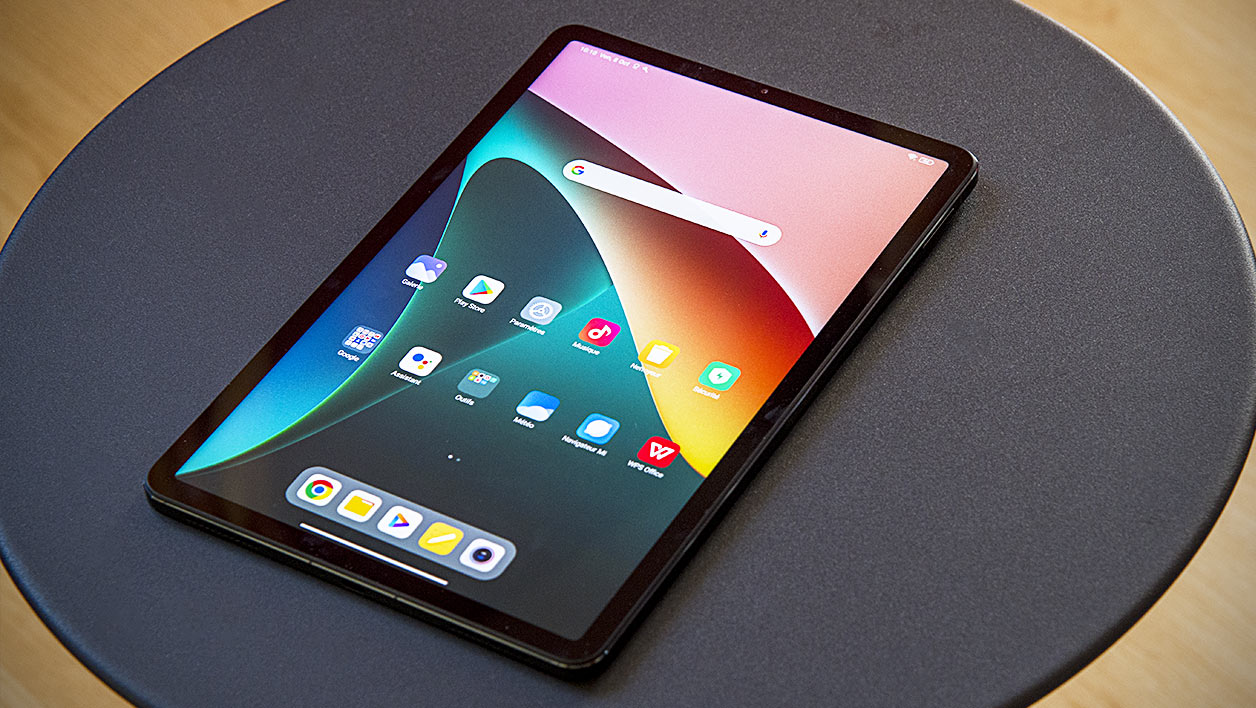
Xiaomi Pad 5 Review
Its Xiaomi Pad 5 is a brand new entry into the tablet market that is mid-range in India and has a competitive price beginning at Rs. 26,999. It comes with a powerful processor as well as a fast refresh rate display, two characteristics that aren’t commonly available on tablets in this range. This makes it a highly attractive product, particularly when you consider it can also be used with a stylus as well as keyboard cover accessoriesthat are available separately.
Does the Xiaomi Pad 5 a good enough mid-priced Android tablet? And more important is it equipped with any unique features in its software that can make it more than a mere tablet for media use? Let’s find out with this review.
Xiaomi Pad 5 price in India
Xiaomi Pad 5 Xiaomi Pad 5 is available in two different variants, and both have six GB RAM. The base version includes 128GB of memory and retails at just Rs. 26,999. The second comes with 256GB of storage, and costs just Rs. 28,999. The tablet comes in one color named Cosmic Gray and comes with an in-box charger and the USB Type A to Type C charging cable.
There are three accessories on this tablet. All are available separately. Its Xiaomi Smart Pen is priced at Rs. 5,999. While the basic foldable cover costs Rs. 1,999. Also, there is the cover for the Xiaomi Pad Keyboard however, it is not yet to be sold in India as of the date of this review and we don’t know the price.
Xiaomi Pad 5 design
Xiaomi Pad 5 Xiaomi Pad 5 has a metal frame with flat sides with a glass screen in the front as well as a sheet of polycarbonate in the back. This Gorilla Glass 3 screen that covers the display doesn’t catch fingerprints well however the back panel, which is matte-finished, is a smudge magnet and very difficult to keep free of dirt. Should you buy the cover case it should protect the back of the case and provide some protection from grime and dust.
When placed vertically, this tablet features two speakers, one on each of the right and left side and a magnetic connector for the Smart Pen on the top of the frame as well as three pins to connect the keyboard on the bottom. The only part that isn’t at a level with the other components on the device is the one camera module on the rear, but it’s not a lot of a protrusion. The volume and power buttons are situated in the upper left corner. They are easy to locate however they require some pressure to utilize.
It’s a great tablet for gaming. Xiaomi Pad 5 feels quite elegant and weighs 511g. I’ve found it to be quite heavy. In fact, it’s not the ideal device for use with one hand. The keyboard accessory is some weight and makes the unit nearly as heavy an ultra-thin laptop which is why I prefer to take it off when I was doing things like gaming. The cover that is foldable (without having a keyboard) is claimed to be much lighter , and can also be used as a stand that folds to hold the tablet.
Of the three options I’d suggest Pad Keyboard is the best of them all. Pad Keyboard is an absolute must-have should you be planning to do some work done using Xiaomi Pad 5. Xiaomi Pad 5, provided Xiaomi actually offers it.
Pad 5 specifications and Xiaomi Pad 5 software and specifications
It is the Xiaomi Pad 5 tablet is powered by the Qualcomm Snapdragon 860 SoC which was unveiled in 2021. It’s basically an upgrade of Qualcomm’s Snapdragon 855+ processor that was first announced in the year 2019. It’s built with the 7nm process but was specifically designed to be used in high-end smartphones and therefore performance shouldn’t be too the main issue. However, what’s uncertain is the 6GB of RAM, particularly considering Xiaomi’s massive MIUI skin however we’ll find out how it works in the next section.
For connectivity standards The Xiaomi Pad 5 lacks 4G/5G cell capability, and is only available as a Wi-Fi version. There’s Wi-Fi acconnectivity, Bluetooth 5 and a USB Type C port, however it’s not equipped with an 3.5mm headphone socket that I think could have easily been fitted considering the tablet’s size as well as its thickness. The absence in an LTE option might prove to be a problem for those who must connect to Internet during travel. Contrary to it’s predecessor, the Lenovo Tab P11 Pro ( Review) I was able to download WhatsApp and make video and voice calls without issue and cellular connectivity could have been a huge benefit. The tablet comes with a 8720mAh battery that can support up to 33W of fast charging, but Xiaomi includes only one 22.5W charger with the box.
It’s the Xiaomi Pad 5 runs ‘MIUI for Pad”, which is a customized variant of MIUI 13.0.5 that is based upon Android 11. It’s like the one Xiaomi normally provides on its mobile devices with the same iconography along with UI components, this company appears to have reduced its dependence on the number of preinstalled apps from first-party developers which is a beneficial thing I would say. There is only one third-party app that is preinstalled that is Netflix. Additionally, there’s an Notes application that looks quite similar to iOS and iPadOS however it works when used with smart pen. Smart Pen.
The Xiaomi Pad 5 has plenty of tablet-friendly customizations throughout its user-interface. The home screen comes with an macOS inspired dock and menu bar that remains open at the bottom of the screen while you’re on your home screen. It’s possible to pin apps that are frequently used as well as show you the apps currently open. You can access it using the move-to-the-up (on both sides of the horizontal bar that is located at lower right of screen) when you are using an application. It’s odd that this gesture isn’t available when you change the navigation style to three-button interface instead of using the standard user interface that relies on gestures.
It is much easier using the gesture-based navigation system because the dock behaves as a Windows 11 taskbar, showing apps you’ve pinged in the dock , as well as currently running apps on the left. This eliminates the need to navigate to the menu for recent apps and making switching between applications much more convenient. Similar to Xiaomi’s smartphones as well, you can move your finger upwards in the lower screen to toggle between open applications.
Apps can also be accessed with floating windows, which is what Xiaomi describes it. However it is not the case for all apps in this manner and weirdly includes certain native Xiaomi applications, like Calendar. However, the floating windows feature works well with applications that are supported. Simply press long on the icon of an app and an open menu will appear. It will then show an option for floating windows. By pressing that, you can open the app supported in the vertical windowed mode as it does on smartphones.
But, you can alter the size of the window floating by dragging the dots that are located at the lower corner of the screen. If the app was designed to work with tablets and you are able to see how the design of an application like Outlook changes as the window grows. The floating applications will load as you change between horizontal and vertical orientation, since it has to adjust the layout to suit. The floating windows can be minimized to a smaller like a preview, which is useful if you have to concentrate on the primary application while keeping an eye on other activities in the windows of apps.
There are some limitations with using the floating window function. I was able to run two apps in windowed mode, and another app was running in fullscreen mode, running in the background. It is a great option when you need to complete some serious work. I used an entire Chrome browser open on Full Screen, Google Docs in a separate window as well as Slack open in a separate window, making the tablet extremely productive for work tasks.
Although MIUI for Pad is heavily influenced by Apple’s iPadOS however, it’s actually one of the best Android tablets operating systems that I’ve utilized. Likely, certain applications like Instagram were only available in full-screen mode, and it was the case that Google Discover section was displayed the same way it would appear on a smartphone but with plenty of blank space to both sides of the page. Google’s brand new Material You widgets looked great and functioned as expected however, it was lacking certain features like the ability to match the color of the wallpaper since Pad 5 doesn’t have the capability. Pad 5 doesn’t run Android 12.
Xiaomi Pad 5 with 5 Performance
The software performance was extremely effortless on Xiaomi Pad 5, thanks to the powerful processor along with the high-resolution display that made everything seem fluid. While I was able multi-task while using three apps simultaneously with floating windows, with no crashes or restarts, earlier launched apps I pulled into the Recents menu frequently restarted, suggesting that the device might be benefited by additional RAM.
Its 10.95-inch WQHD+ (1,600 2 560 x 1,600 pixels) LCD displays produce natural colors when it is used in the standard colour mode. It’s bright enough for direct sunlight, and it offers good sharpness, and the display’s pixel density at 275 PPI. This display has been Dolby Vision certified and even though Netflix as well as Amazon Prime Video did allow streaming of Dolby Vision content, and everything was working as expected however, the display was a bit shaky when it came to showing excellent details in the dark areas of some television shows. The black levels in streaming video tend to end appearing somewhat gray.
The tablet has an maximum refresh rate of 120Hz that is useful for playing games. The tablet was in good condition. for a mid-range tablet I did experience some ghosting while scrolling through text, whether in an application or surfing through websites. The audio quality was excellent and it sounded incredibly immersive when playing games or watching films and movies, to the point that I didn’t need to attach headphones.
In terms of benchmarks for benchmarks, when it came to benchmarks, the Pad 5 performed as expected. It scored 5,72,369 points on AnTuTu and 252 and 683 in Geekbench’s single-core and multi-core tests, respectively. These scores are similar to a mid-priced phone like that of the OnePlus Nord 2 ( Review) phone, which comes with the MediaTek Dimensity1200 SoC.
The gaming performance was pretty impressive. Asphalt 9: Legends looked brilliant and felt console-like with crisp textures and performed smoothly with the 60fps mode activated. Call of Duty: Mobile performed well even at the highest settings the game allows on tablets which was ‘Very high graphics’ as well as ‘Max’ frame rates with all effects being turned on. The tablet didn’t get too warm when playing in these conditions. For those who don’t enjoy the idea of holding an iPad (because the weight) could also connect an electronic controller to it, in the event that the game allows it.
The case for the Xiaomi Pad Keyboard contains magnets concealed within its plastic exterior, which resembles leather. they secure the tablet when it is attached. The build quality of the case is excellent. The keys are well-traveled for a keyboard that is soft as well as the experience of typing is comfortable , despite the smaller size. What I did not have was a trackpad that will require less interaction with the screen. A mouse can be connected using a Type C hub or Bluetooth however, you’ll require a desk in order to use this configuration.
Keyboard shortcuts are available also and Xiaomi has also added an adjustable multi-tasking key that is known as the Function Key. It is able to be used with the other key combinations to launch native as well as third-party applications. A double-press of the Function key allows users to switch between frequently downloaded apps that came in handy when working using the tablet. Although the keyboard was able to meet my expectations at a hardware level however, there were a few instances when the tablet did not recognize the keyboard when connected.
Xiaomi also provided me with also the Smart Pen to try out. The Smart Pen is attached onto the device’s top and utilizes inductive charging to recharge. The pen fully charges within about 20 minutes. it gives you an immediate snap when it’s perfectly placed in the center and then a message appears on the screen that displays the charge level and charging state for the device. The pen is a bit odd, as it is still able to be plugged into the right and left of the proper charging location however it will not charge. The pen weighs only 12.2g and the soft tip has 496 levels of pressure sensitivity like Samsung’s S Pen.
It’s a good thing that the Smart Pen worked as expected and isn’t just used for creative workflows, but it can also be used handy for basic tasks like signing documents. There’s not much time to input and it feels very natural writing using it. The rejection of the palm when using the pen in Xiaomi Pad 5 Xiaomi Pad 5 isn’t perfect however, and it did result in some stray scribbles appearing in the application. Smart Pen comes with two keys. Smart Pen also has two buttons. One can be used to capture a picture of the content on screen (which may be annotated later) and the second button is opened to create a brand new note using Xiaomi’s Notes application.