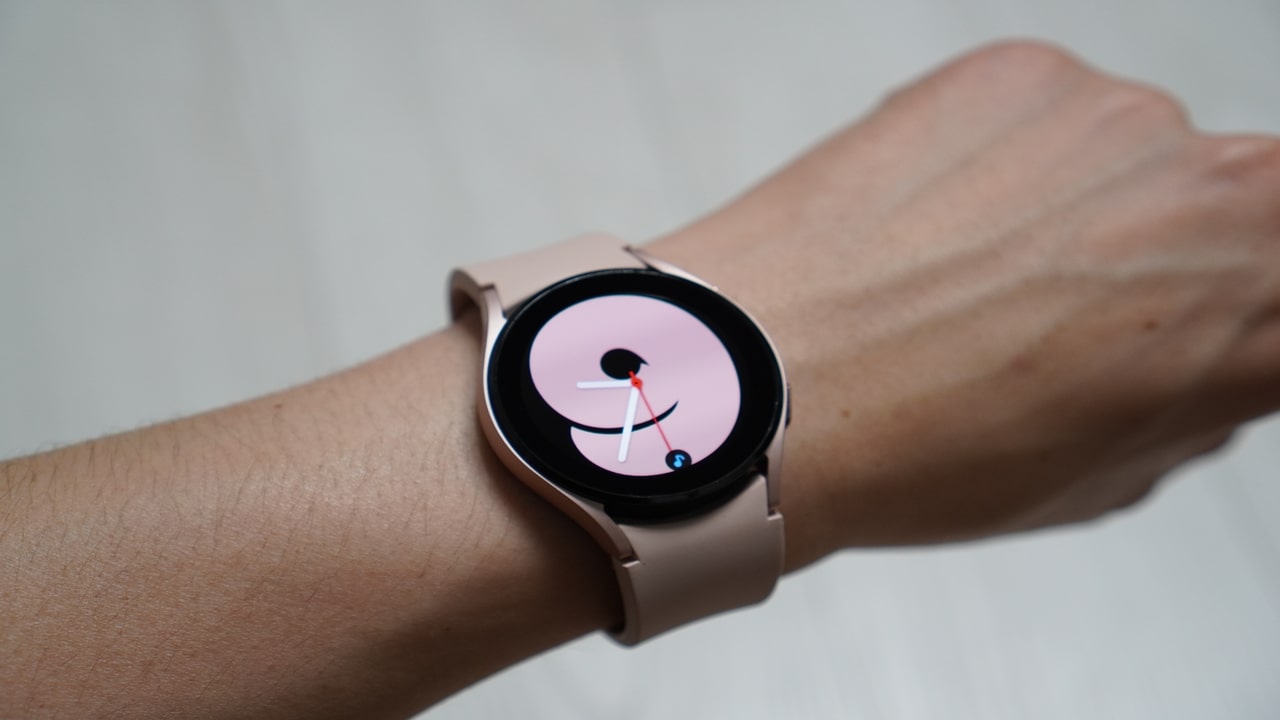
SAMSUNG GALAXY WATCH 5 REVIEW
AfterAfter trying out Samsung watches, I’m typically looking at my watch with a furrowed eyebrow and wondering what the reason might be the cause. They’re not bad or ugly, but because they’re an inconvenience to wear. In fact, the reverse is true. The Samsung smartwatches are among the top Android users have the ability to buy currently including their $279.99 Galaxy Watch 5 is not an exception. (Though it could change once Google’s Google Pixel Watch arrives. )If Samsung would fix one or possibly two or three issues, its smartwatches will bring the Apple Watch the news of the day. I was hoping to say that Samsung was finally able to nail it however, whether it’s better or worse Watch 5 is a rehash of the Watch 5 is more of the same.
This isn’t a metaphor for. It’s the case that the Watch 5 is nearly identical to its predecessor that was the Galaxy Watch 4. It is available in the same sizes, 40mm and 44mm. Apart from a few different color options, the strap appears exactly the same. I’ve reviewed nearly every smartwatch available and the color of the strap is the only way to identify the difference in the Watch 4 and 5 review watches in an eye.
GOOD STUFF
- Not as locked in with Samsung’s ecosystem
- More accessible features
- Slim, lightweight design
- Improved durability
BAD STUFF
- The battery isn’t as good
- The temperature sensor isn’t doing very much at the moment.
- Upgrades are extremely simple
- Bezel with a touch of finicky
Watch 5 comes with many of the same features as its predecessor, including GPS. Watch 5 also has many of the same specifications as it’s predecessor, the Watch 4, including the Exynos W920 processor, 1.5GB of RAM, 16GB internal storagecapacity, contactsless payment GPS, an optional LTE payment, contactless, with 5ATM of resistance to water. You also get all of the health functions as the Watch 4 via the improved 3-in-1 BioActive sensor that tracks heart rate, ECGs, body composition analysis. Hardware-wise, all you get is a new item you’ll receive is an infrared thermometer. This, however isn’t doing much of much at all. It’s going to be able toallegedly increase the accuracy of sleep tracking however, as Samsung announced at Unpacked that it has included the sensor to allow developers can experiment with future health-related features. For software it comes with Wear OS Powered by Samsung (aka Wear OS 3 that runs an Samsung skin). Samsung’s Galaxy Watch 5 Pro is expected to launch alongside it’s predecessor, the Watch 5 on August 26th and will include the latest design options and features such as turn-by-turn navigation however, this version of the Watch 5 is a very basic update.
I doubt that many people will notice the few changes Samsung has introduced to its. The watches of 40mm and 44mm are heavieraround one-third of the weight that a centimeter weighsdue to having slightly bigger batteries. The back is curvier to give more skin contact and better accuracy. The curly back doesn’t affect the feel of your wrist. Samsung claims that it’s 9.8mm thick, however the YouTuber DC Rainmaker found that it’s actually more like 13mm in the case of the bump for sensors. However, you’ll barely even notice it. Watch 5 Watch 5 also uses sapphire crystal glass to provide more durability. This is great, but it’s not a product that will be liked by everyone who’s not a klutz, an adventurer or an enthusiastic Klutz.
Of of course, there are new watchfaces also. Certain will grab your attention. Others will not. I like the fact that you can make a mess of the blobby numerals. The new purple dragon design draws me in, since I’m currently on an obsession with purple gadgets as well as a dragon in the Chinese zodiac. If you don’t love the new (or old) face on your watch, you’ll never be aware of it since you’ll never utilize it.
Watch 5. Watch 5 is the definition of an iterative update however, I’d have been remiss if didn’t mention two crucial enhancements.
The most obvious improvement is that you will no longer have to live with Bixby. The on-watch Google Assistant had been a nebulous assurance at the time that Samsung’s Galaxy Watch 4 launched last August, but it came out some time ago. One of the first things I tried after I removed the watch and charged it Watch 5 was download Google Assistant and modify the Home button to open it in place of Bixby. Another step I took was to downloading Google Wallet, Strava, Spotify, Calm, and several other popular apps. This immediately resulted in more enjoyable experience as I no longer had to be tied by Samsung Health, Samsung Pay, Bixby, or Samsung SmartThings. (The Galaxy Wearable app, however, is not a requirement.) I’m able to use Strava to keep track of my runs, Google Assistant to control my smart home as well as Google Wallet to pay for my prescriptions at the pharmacy. Although Watch 4 Watch 4 was very much an Samsung smartwatch however, Watch 5 is not. Watch 5 is less so.
To be transparent to be clear, it’s important to note that the Watch 5 is still more useful for those who own the Samsung phone. To begin with it’s Samsung Health’s ECG function is only available on Samsung phones as well as at least a dozen third-party applications to replicate the health and health features offered by Samsung Health on any other phone. Samsung Pay has also been coded as a shortcut whenever you press the back button for a long time however there’s not any way to modify it to use Google Wallet in place of. One-UI Watch 4.5 — Samsung’s watch-like interface that sits on the top of Watch OS It also provides Watch 5 Watch 5 the capability to use the ability to have two phone numbers, however only when it’s linked with the Galaxy phone that has dual-SIM capability. However, if I need to switch Bixby the finger , or download a few programs to substitute for Samsung Health and Samsung Health, it’s possible to do so through the Play Store will be my choice. It’s not perfect, but it’s progress over last year and the year prior.
When it comes to OneUIWatch 4.5 The updated interface has a lot of accessibility features that are new and places all of them in one menu that is easy to find. The new features include improved visibility including high-contrast fonts filtering colors, color adjustment and the ability of switching blur effects or animations. You can also alter Bluetooth headphones settings to alter the audio’s balance between the two ears. (Though it’s not possible to make this adjustment during calls.) Samsung has also added the capability to alter the duration of taps and disallow repeated taps.
As an individual who is hearing and able-bodied I am unable to speak with authority about the way these features for accessibility work in daily life. The enhancements in visibility have significantly enhanced my reading abilities on the Watch 5. My birthmark was eyes and was astonished when my eye doctor who said “sometimes you need to take a chance and settle for a good enough” when I was getting an eye prescription for the first time. I’m also a person with smaller wrists. As an editor, I’m exhausted of having to decide between a tiny watch that is comfortable to wear, and one that is massive and has an easy-to-read LCD. My wrist size and vision aren’t something I influence, but it’s hilarious to note the difference the use of high-contrast fonts as well as an opacity filter created. Wearables still have a long way to be readable and I’d love to see that more manufacturers of smartwatches followed Samsung’s example with regard to this.
Samsung has also made it easier to type on smaller screens by introducing the introduction of new inputs for keyboards. There are now handwriting, dictation, and swipe-to-type features. Your mileage could vary however. I have found handwriting and dictation to be helpful, but using a swipe to type on a screen that is 40mm wide is unsuitable regardless of how you slice it.
These are major improvements however, I can’t not help but feel that Samsung has fallen off the mark in the big way in regards to the touch bezel as well as battery life.
The touch bezel resembles an actual bezel by sliding your fingers across the rim of the display to navigate through menus. It was difficult when I used Watch 4, but it was a breeze on Watch 4, but it appears to be more difficult when you compare it to Watch 5. Watch 5. I clearly remember getting knack of it on my Watch 4, but I had a hard time doing it again this year. (I always went for the Watch 4 Classic whenever I required to test out new features over the course of the year, which is why it’s been a while since I’ve used the Watch 4 Classic.) When I was swiping too fast the tiles would fly by faster than my cat who was running to get a second breakfast. If I swiped too slow the tiles would not register at all. It was also too easy for my fingers to slide away from the edge or even outside the area of the bezel that is touch sensitive.
Technically speaking, technically, the Watch 5 doesn’t need the touch-screen bezel in any way. Its Wear OS 3 might have some of the DNA of Tizen However, the UI does not have the same fun that Tizen did when it came with circular menus. The menus on Wear OS 3 can be easily navigated using directional swipes on its own. (Taps and swipes weren’t registering exactly as well when using the Watch 5, either. However, I’d attribute the issue to my hands being sweatier than usual because of the recent heat wave.)
My disappointment is due to the fact that I’m a fervent Card-carrying member in Team Rotating Bezel. I’m not averse to touchscreens or the ability to swipe to access menus. It’s much easier to use for certain things, such as browsing through messages and zooming in on maps. However, physical controls do have their place. They’re not only easily accessible, but they’re ideal for athletes who exercise outdoors because they’re not susceptible to sweaty hands and sweaty gloves. Samsung’s rotating bezel is an iconic call card that both brought back the previous Gear line-up and also distinguished it from all other circular smartwatch in the market. Additionally the rotating bezel is an absolute enjoyable to wear. Modern design for gadgets seems too content to sacrifice creativity for minimal design.